
“Stroke! Stroke!”
Cries a mother from a rural village in Ibadan, Nigeria.
“How can my son have stroke? He’s just 12 years old — ko le possible! (it can’t be!)”
Her cry echoes a question many still ask today.
According to the World Health Organization (WHO), stroke ranks as the second leading cause of death globally and the third leading cause of disability. But what exactly is this dreaded condition that brings such anguish to families around the world?
💥 What Is a Stroke?
A stroke is a silent killer — a thief that strikes without warning, stealing speech, movement, and sometimes life itself. For many survivors, it leaves behind a shadow — dependency, frustration, and loss.
Medically, stroke is defined by the American Heart Association/American Stroke Association (AHA/ASA) as an acute episode of focal neurological dysfunction lasting more than 24 hours. Simply put, it’s a “brain attack.”
Yes, you read that right — a brain attack.
It happens when the flow of blood to a part of the brain is interrupted — either by a blocked artery (ischemic stroke) or a burst blood vessel (hemorrhagic stroke). Without oxygen-rich blood, brain cells begin to die within minutes.
But don’t worry — this humble writer isn’t here to drown you in medical jargon. For our beloved medical readers, you already know where to look. For everyone else, the goal here is simple: to understand, to care, and to act.
⚠️ Why Should You Care?
Because stroke is not a disease for “old people.”
According to the World Stroke Organization (WSO) and AHA, every 3–4 seconds, someone in the world suffers a stroke. And every 6–10 seconds, someone dies from one.
Each year, 15 million people experience a stroke.
➡️ About 5 million die,
➡️ Another 5 million live with permanent disability — changing not just their lives but those of their families forever.
If these numbers don’t move you, perhaps nothing will — unless, God forbid, it happens to someone close to you. But if it ever does, knowing what to do could save their life.
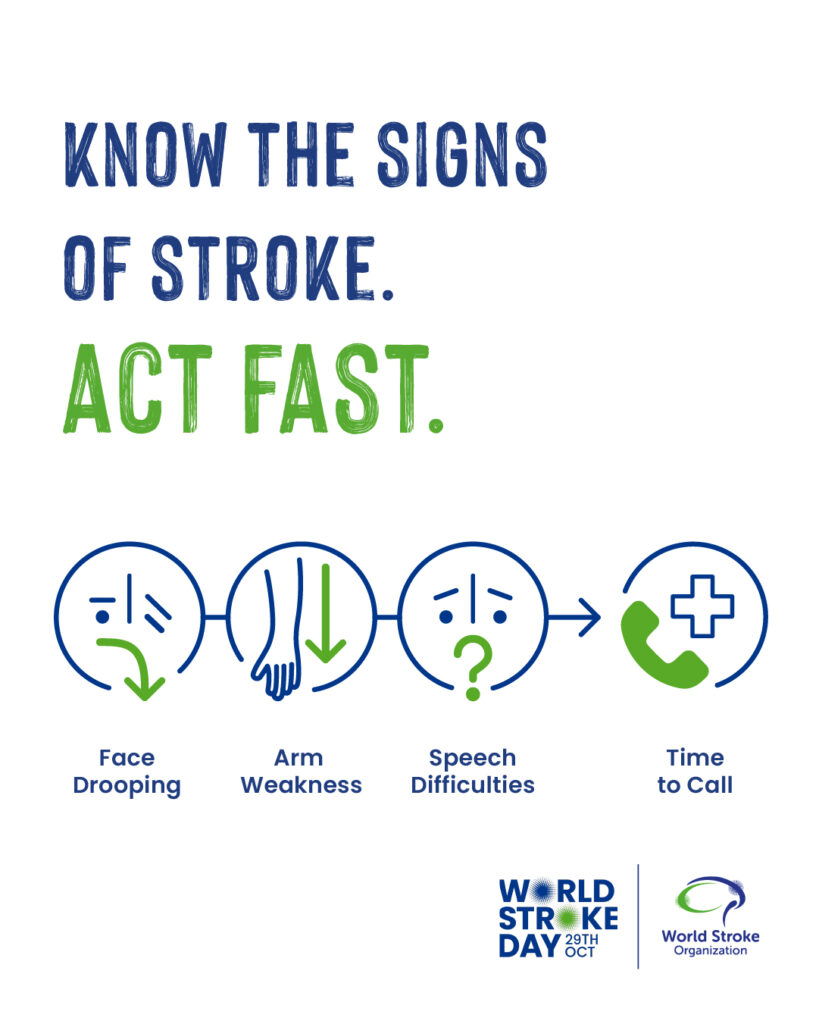
🛑 Know the Warning Signs – Think F.A.S.T.
Recognizing stroke symptoms early can make all the difference.
Remember the acronym F.A.S.T.:
F – Face drooping
A – Arm weakness
S – Speech difficulty
T – Time to call emergency services immediately
The saying “Time is Brain” couldn’t be more true.
With each passing minute of untreated stroke, brain cells die.
Timely treatment can mean the difference between a full recovery and permanent disability.
Time lost is brain lost.
🧠 What Causes Stroke?
Several factors increase the risk of stroke. Some are lifestyle-related; others are medical.
Common causes and risk factors include:
- High blood pressure (the #1 cause)
- Smoking
- Diabetes
- Obesity
- High cholesterol
- Excessive alcohol use
- Physical inactivity
- Poor diet
- Atrial fibrillation (irregular heartbeat)
- Heart disease
- And yes — in children, sickle cell disease can be a culprit.
Could this have been what caused the stroke in the 12-year-old boy from Ibadan?
A question for you, dear reader, to ponder — perhaps the clues above will guide your answer or not.
💪 What Can You Do Today?
Prevention begins with simple, consistent actions:
- Check your blood pressure regularly — and treat it if elevated
- Exercise for at least 30 minutes daily
- Eat a balanced, low-sodium diet
- Avoid smoking and limit alcohol intake
- Manage stress
- Take prescribed medications properly
- Get regular health check-ups, especially for the elderly
🌍 This World Stroke Day…
Every year, the world unites to raise awareness about stroke — a silent destroyer that strikes suddenly and often without warning.
So, how can you help today?
Start small. Share this article.
Tell a friend. Encourage your loved ones to get screened.
This World Stroke Day 2025, let’s make a promise — to learn, to share, and to act.
Stroke is a medical emergency, but with awareness, action, and early treatment, we can change the story — one life at a time.
⏰ Remember: Every Second Counts
- Know the signs.
- Control the risks.
- Spread the word.
Join us at SBI and stay tuned every Friday as we continue to break the chain and demystify the myths around stroke.
#WorldStrokeDay2025
This humble writer now lays down his pen — with the hope that you, dear reader, will pick up the torch.
Stay informed. Stay healthy. Stay alive.
Jerry-Ogeme Oghenemaro,
Content Creation Team,
SmileBuilders Initiative
Really nice writeup, Thanks for sharing this knowledge